People rarely search for a definition of an emotion. They search after something happened — a look across a table, a reply that was not quite an argument — and they want to know what it was.
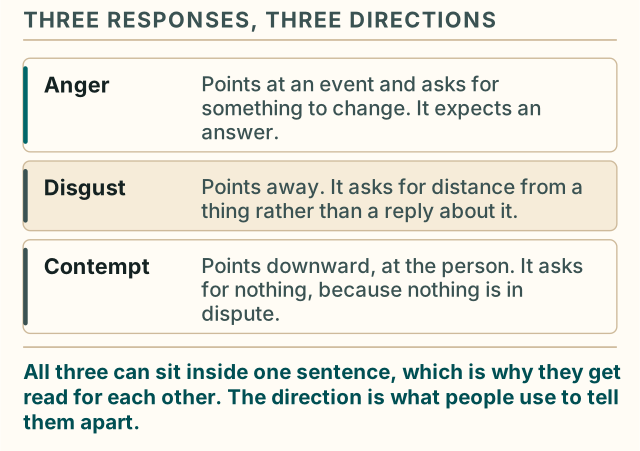
The short version of contempt vs anger is direction. Anger is a demand that something change, aimed at an event and usually loud about what it wants. Contempt is a ranking: a statement that the other person is beneath the one making it. Disgust is a move away — a rejection response to something you want no part of, aimed more often at a behaviour than at a person. All three can be present in one sentence, which is why they get confused.
What is the difference between contempt and anger?
Anger is about an act; contempt is about a hierarchy. Anger says this is not acceptable and it needs to change. Contempt says you are not the kind of person whose behaviour I expect anything from, and that sentence has nowhere to go.
That difference is not about intensity. Anger can be much louder and much uglier while remaining a complaint about a thing. Contempt can be delivered in a mild, almost pleasant tone and still close the conversation, because it has already reached its conclusion.
| Anger | Disgust | Contempt | |
|---|---|---|---|
| What it wants | something to change | distance from the thing | nothing; it has concluded |
| What it is aimed at | an act or a situation | a thing, a behaviour, sometimes a person | the person’s standing |
| How it sounds | direct, loud, specific | recoiling, refusing, “I cannot with this” | dry, amused, dismissive |
| What the face does | brows down and together, tightened lips, hard stare | nose wrinkled, upper lip raised, head drawn back | one-sided mouth pull, raised chin, narrowed eyes |
| What it leaves you | an argument you can have | a subject that is closed | a verdict you cannot answer |
Read the last row first. It is the practical difference: anger leaves something to talk about, and contempt does not.
The same underlying complaint, said three ways, makes the distinction concrete. Each line below is followed by two words naming what it does.
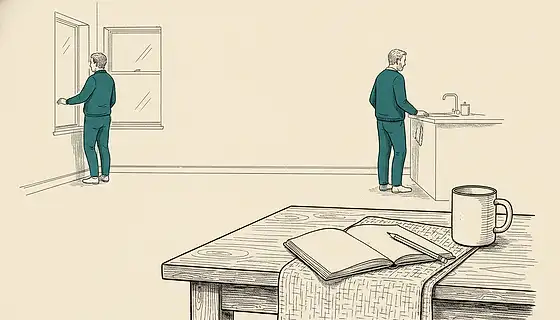
“You said you would call them and you did not, and now I have to.” — stated demand
Angry, specific, answerable. There is a fact, a cost, and an implied request; every one of those is something the other person can take up.
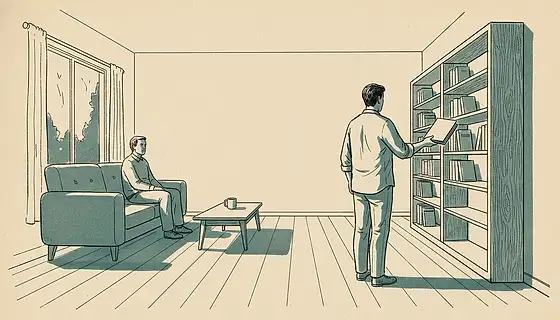
“I cannot even look at the state of that cupboard.” — recoiling refusal
Disgust aimed at a thing. Unpleasant to hear, but the subject is the cupboard, and cupboards can be negotiated.
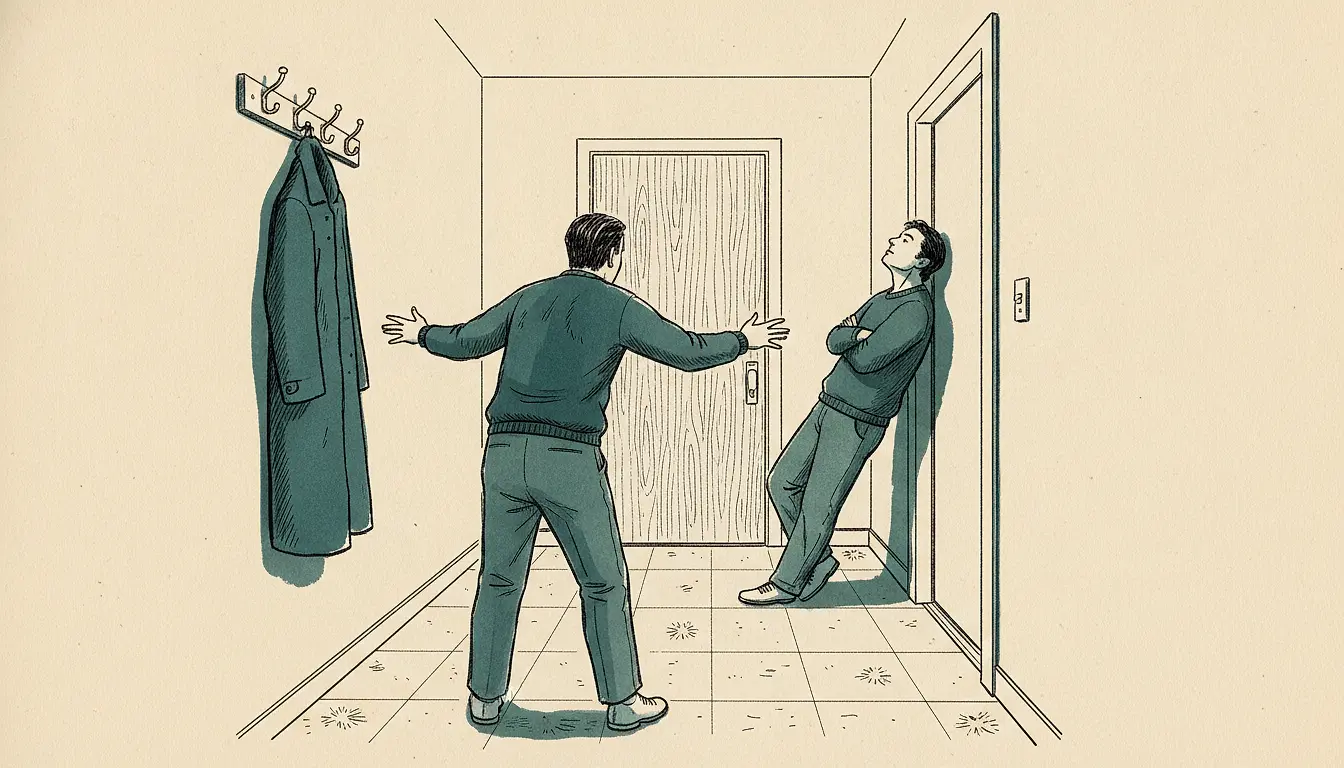
“Of course you did not call. Why would I expect anything else.” — downward verdict
Nothing is being asked for. The sentence has moved from the phone call to the sort of person who does not make phone calls, and there is no reply that changes it.
What does anger want?
Anger wants a change, and it is generally specific about which one. Stripped of volume, an angry sentence contains a complaint and, usually, a request buried inside it.
That is why anger, unpleasant as it is to receive, is workable. You told me you would be here at seven and it is nine has a fact in it and an implied demand. You can agree, disagree, apologise or explain, and all four of those are moves in a conversation. For instance, a partner who is furious about a missed appointment is telling you the appointment mattered — the fury is information about what they care about, badly packaged.
Harriet Lerner’s The Dance of Anger (publisher page) is the standard treatment of anger as a signal rather than a fault, and its central move is turning the heat back into a statement about what you need. That move is available for anger. It is not available for contempt, because contempt has no request inside it to recover.
Anger has failure modes of its own, and they are not small ones. It can arrive at the wrong person, it can be used to end a conversation by making it too expensive to continue, and repeated often enough it can teach a partner not to raise things. None of that makes it the same pattern. The line between them is whether the sentence is still asking.
One more thing anger does that contempt does not: it keeps the other person in the room. An angry partner is still engaged, still expecting something, still treating the argument as worth having. That is cold comfort mid-argument and it matters enormously over years, because engagement is the condition every repair depends on.
What does disgust do?
Disgust creates distance. It is a rejection response — the move away from something you do not want near you — and in a relationship it usually attaches to a behaviour rather than to the whole person.
That last part is where it overlaps contempt and where the two get conflated. Disgust at a habit is common and survivable; couples negotiate it constantly, mostly without naming it. Disgust that has generalised from a habit to a person is functionally close to contempt, because at that point what is being rejected is them.
There is also a version of disgust that is really about disappointment, and it is worth separating. A partner recoiling at a decision you made — a purchase, a message you sent, a way you handled a family member — is reacting to the act. The tell is what happens next: if the conversation can get back to the decision, it was disgust at a thing. If it becomes a summary of your judgement in general, the subject has quietly changed to you.
The distinction that keeps the two apart is standing. Disgust says not this, not near me. Contempt says you, below me. Consider a partner who cannot stand the way you eat: that is a complaint about a behaviour, even if it is delivered with a grimace. If the same grimace is produced when you offer an opinion, the subject has changed.
What does contempt do that the other two do not?
It ranks. Anger and disgust are both, in their ordinary forms, responses to something. Contempt is a position taken about someone, and that is why it is the hardest of the three to walk back.
Two features follow from the ranking. The first is that contempt cannot be satisfied. There is no action available to the other person that would withdraw it, because the objection is to them rather than to a thing they did. The second is that it removes the point of listening: once a conclusion about a person is settled, their answer is not evidence, it is noise.
That is also what makes it hard to apologise for. An apology for anger addresses an outburst. An apology for contempt has to address a stance — and the person who held it often cannot say when they adopted it. The stored, still-arguing version of the same territory is contempt vs resentment; the pattern in full, including what reduces it, is on the main page.
For what it is worth as context, contempt is singled out in the Gottman Institute’s description of the four horsemen as the most corrosive of the conflict patterns it names, for roughly this reason: the others damage a conversation, and this one damages the premise that the two people are equals.
What does each one look like on the face?
Anger and disgust are usually described as symmetrical; the expression associated with contempt is the one people describe as lopsided. That asymmetry is the single most useful thing to know about all three.
An angry face is typically described as brows lowered and drawn together, eyes hard and fixed, lips pressed thin or squared. The whole face is engaged and it is aimed at you. A disgusted face pulls upward and away: nose wrinkled, upper lip raised, head sometimes drawn back, as if distance were being created physically.
The contempt facial expression refers to the lopsided version people describe when they say someone looked at them with contempt, and it is the odd one of the three. It is commonly described as one-sided — a corner of the mouth pulled back and slightly up, sometimes with a raised chin, sometimes with a narrowing of the eyes — and it reads as a smirk rather than as an expression of feeling. Imagine a smile that only half arrives, appearing while someone else is still speaking. That is the version people remember.
Two cautions, and they are the reason this section is short. We have no verified primary source in our register for a formal coding of any of these expressions, so what is written above is description of what observers report, not measurement, and it carries no timings, counts or accuracy claims. And a face is not a mind. An expression tells you something happened in a moment; it does not tell you what someone thinks of you, and treating it as proof reliably produces an argument about whether the look occurred. The fleeting version of the expression is covered on contempt micro-expression. Every source we cite is listed on sources.
Why does the difference matter in an argument?
Because anger is arguable and contempt is not, and the two need entirely different responses.
With anger, the useful move is to find the complaint under the volume and answer that. It is often a bad-tempered version of something reasonable, and treating it as a request rather than an attack tends to lower the temperature. With disgust, the useful move is to establish what precisely is being rejected — a habit is negotiable, a person is not.
With contempt, neither of those works, because there is no request to answer and no specific to narrow down. What is left is naming the pattern rather than arguing the content: saying that the line placed you below the person saying it, and that you are not going to argue the tone. That is not a winning move; it is a way of staying out of a trial.
It is also worth being realistic about how mixed real arguments are. People do not produce one emotion at a time; a single evening can contain a fair complaint, a flash of disgust at something unrelated, and one line that ranks. The point of separating the three is not to sort a partner into a category, which is the move this whole site argues against. It is to know which sentence is worth answering and which one is not a question.
The other reason the distinction matters is self-directed, and it is the more useful half. Noticing which of the three you are feeling changes what you have to work with. Anger points at a thing you want changed. Contempt points at a grievance old enough to have hardened, which is a different repair and a slower one — that side is on feelings of contempt.