Almost everything written about this pattern is written for the person receiving it. This page is for the other side: the reader who has noticed the feeling in themselves and does not much like what it says.
Feelings of contempt are the private experience behind the pattern — the sense that a partner has become someone you are above rather than someone you are with. The feeling is common, it is not a verdict on your character, and noticing it is genuinely useful, because the feeling is the part that comes first and the part you have any access to.
There is no moral in this page. We describe what people report, what it seems to protect, and what it costs.
What do feelings of contempt feel like from the inside?
They feel like clarity. That is the part that surprises people who expect contempt to feel cruel.
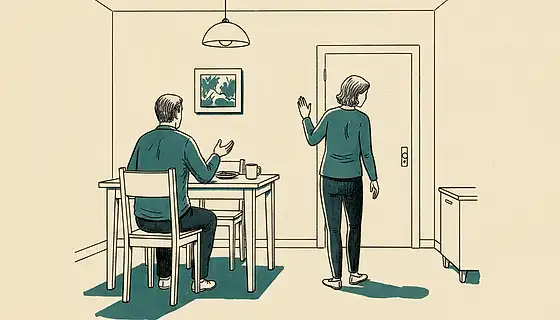
From inside, the experience is usually two things at once: being right, and being finished. Being right is the sense that you can now predict this person — you know what they will say, you know the excuse, you have heard the apology in that exact wording before. Being finished is quieter and more consequential: their answer has stopped being interesting to you. You are not waiting to hear it.
There is often relief in it, too, which is the hardest part to admit. Contempt ends arguments. It converts a live, exhausting negotiation into a settled fact about the other person, and a settled fact does not have to be discussed on a Wednesday night.
“I already know what he is going to say.” — pre-closed verdict
The line names what the feeling does. It is not an insult and there is no anger in it. It simply removes the point of listening.
Where do feelings of contempt come from?
Most often from grievances that were never said in a form the other person could do anything with. The feeling is what a complaint turns into once it has been carried long enough.
The sequence is ordinary. Something bothers you, and saying it seems disproportionate: it is small, you are tired, there is a week to get through. So it goes unsaid. It happens again, and now saying it means explaining why you did not say it the first four times, which is harder. By the time it comes out it is no longer about the thing — it is about the sort of person who does the thing. For example, a complaint about who deals with the family calendar, unsaid for a year, does not arrive as a request about the calendar. It arrives as a sentence about someone’s character, usually in a car, usually before a birthday.
A grievance is a specific complaint with a specific cost, and it stays answerable only while it is still specific. That is the entire mechanism. Nothing about the accumulation is mysterious; what makes it hard to catch is that each individual decision not to say something was reasonable.
Two other routes are worth naming because they do not feel like grievance at all. One is score-keeping — a running ledger of who does more, which turns a partner into a total rather than a person. The other is contempt imported from elsewhere: from a workplace that speaks this way, a family that always did, a group of friends whose humour runs on ranking people.
The stored, still-hot version of an unresolved grievance has its own name and its own page: contempt vs resentment sets the two side by side.
Is contempt a stage of detaching?
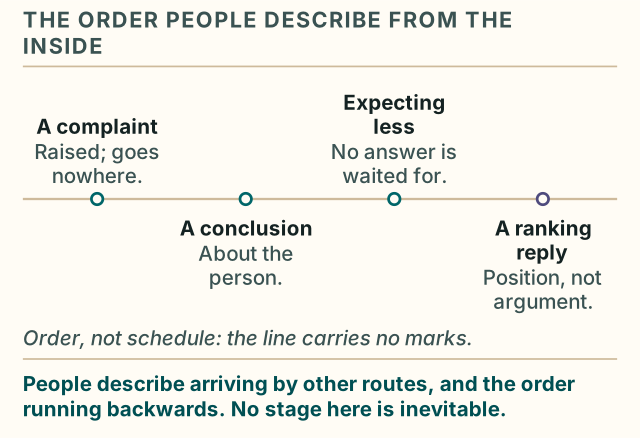
People describe it as one, and the description is worth taking seriously as long as it is not mistaken for an established model. Detachment, in the way it gets used here, refers to the gradual withdrawal of interest and effort from a relationship rather than a formal stage anyone has verified.
The direction people report is fairly consistent. Complaints come first, and they are a sign of investment: you complain about things you expect to change. Then the complaints repeat without resolving. Then the view of the person settles, and their behaviour stops registering as events and starts registering as confirmation. Last comes the quiet part, where their answer no longer matters enough to wait for.
That last step is why contempt reads as a stage of detaching rather than a peak of conflict. Anger keeps a person in the room. Contempt does not need them there, because the conclusion has already been reached. Note what is not being claimed: no fixed number of stages, no timetable, no inevitability. Relationships move both directions along this description, and plenty of people recognise the whole sequence and then talk their way back out of it.
What does the feeling cost?
It costs you the other person’s answer, which is the thing that makes repair possible.
Once contempt is settled, an apology reads as a manoeuvre, an explanation reads as an excuse, and a change in behaviour reads as temporary. Consider what that does mechanically: your partner can no longer do anything that would count as evidence. That is not a claim about them, it is a description of how a closed conclusion works — evidence only counts when the question is still open.
This is also the reason contempt gets singled out among conflict patterns. The Gottman Institute’s description of the four horsemen treats it as the most corrosive of the four, and the mechanism is this one: the others damage a conversation, while contempt removes the premise that the conversation is between equals. Repair is any attempt — a joke, an apology, a change of subject — to keep an argument from getting worse, and contempt is what makes those attempts look ridiculous to the person who would have to accept one.
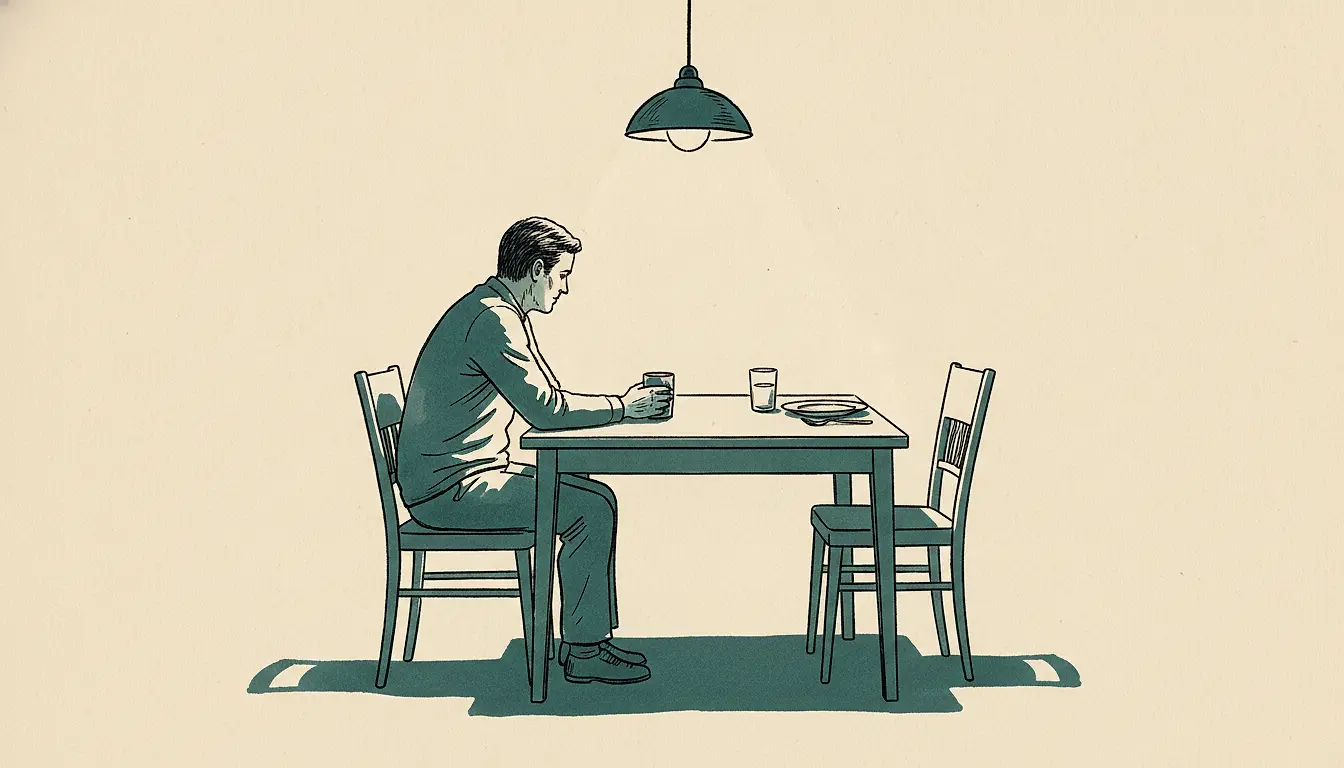
There is a cost on your side too, and it is less obvious. Contempt is comfortable, in the way that any settled position is comfortable. It removes the work of staying curious about someone you live with, and it removes the risk of saying a plain thing and having it land badly. What it leaves is a relationship you are managing rather than in.
And it is difficult to hide. The feeling leaks — into timing, into the half-second before an answer, into a face. The partner on the other end often cannot name what changed and knows something has.
One more cost is worth stating plainly, without any pressure attached to it. The feeling is usually a signal that something you needed never got said, which means it is carrying information about you as much as about your partner. Left alone, that information stays sealed inside a conclusion about them and never gets used. That is the practical case for looking at it — not guilt, and not an obligation to feel differently.
What can you do with the feeling?
Say the grievance while it is still specific — and if it is no longer specific, do the work of making it specific again before saying it.
That means going backwards from the verdict to the events. You are impossible about money is a conclusion; underneath it there are three or four actual things that happened, each with a cost you could describe. Naming one of those is a smaller, less satisfying sentence than the verdict, and it is the only version that gives the other person something to do.
A few things that help in practice:
- Answer the question of what you want. A complaint with no request in it will drift back toward a rating. If you cannot name what would be different, the sentence is not ready.
- Say it earlier than feels necessary. The timing problem is the whole problem. Small grievances said on the day are unremarkable conversations; the same grievances said in a year are character assessments.
- Separate the feeling from the delivery. You are not obliged to stop feeling contempt on command, and trying to is a poor use of energy. The part that acts on another person is the expression, and that part is available to you.
Marshall Rosenberg’s Nonviolent Communication is the book most often recommended for the mechanics of converting a verdict back into an observation and a request. We name it here rather than link it, because it is not yet in our verified source register; everything we do link is listed on sources. Sue Johnson’s Hold Me Tight (publisher page) covers the same territory from the de-escalation side and is written for two people to read together.
If contempt is also coming at you, and both directions are running at once, the receiving side is described on my partner treats me with contempt. The pattern as a whole, including what reduces it, is on the main page.
Where this page stops
Where this page stops. This page describes a pattern in how people talk to each other. It cannot tell you what is happening in your relationship, whether it is safe, or what you should do. It is not therapy and not a substitute for it. If you are frightened of your partner, a page is the wrong tool — talk to someone who can hear the specifics.